
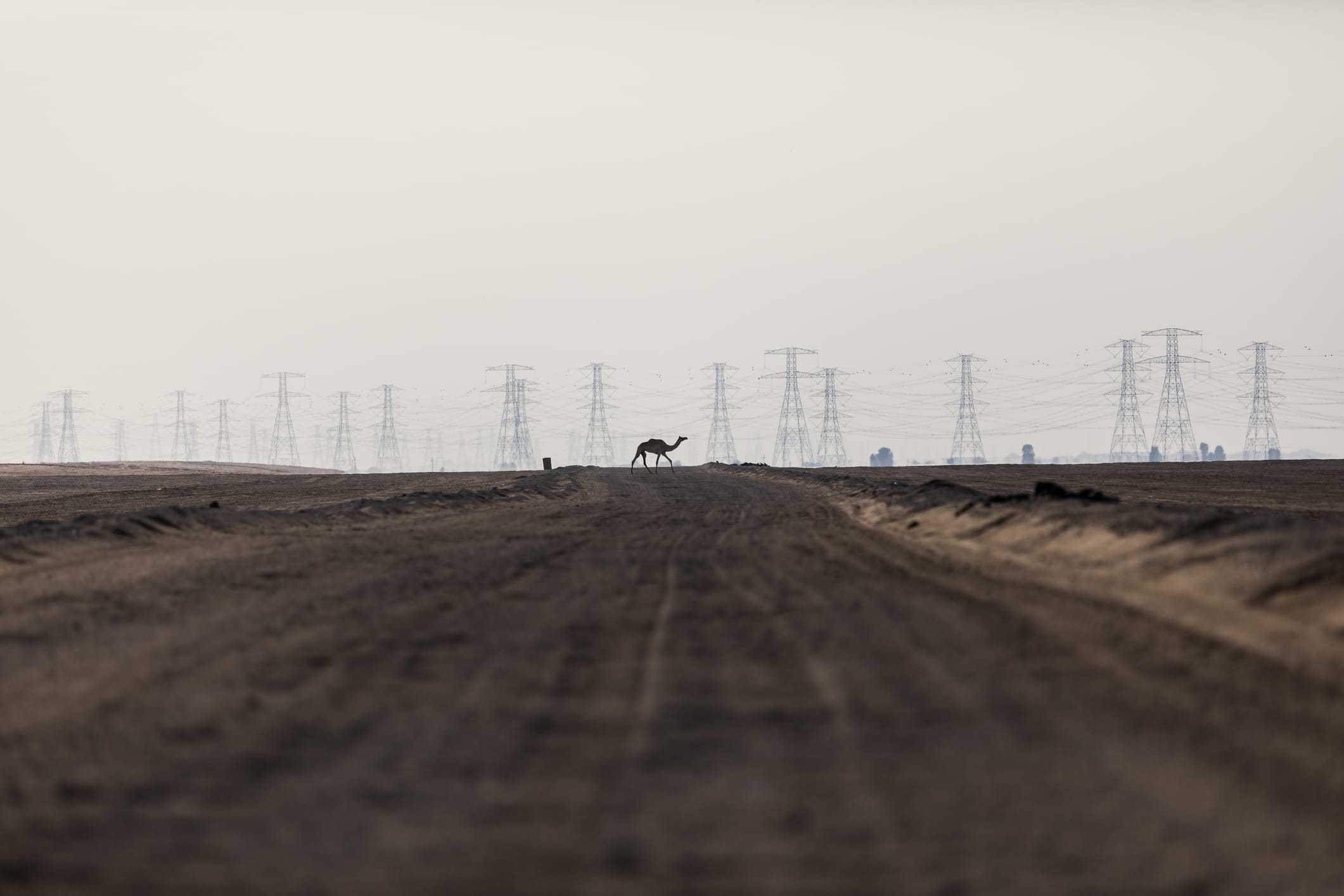
It was June of 2018. In spite of mounting unexplained physical maladies — neuropathy in my feet, legs, hands and arms, episodes of acute hypotension, gastro-intestinal issues and dramatic weight loss — I made the decision to accept a job teaching engineers at a power plant near Abu Dhabi, in the United Arab Emirates. Given my physical condition, moving almost halfway across the planet was certainly risky, but it was a decision that would end up saving my life.
Read the beginning of of Sean’s story: “Searching for answers: The start of my amyloidosis story”
A new opportunity — and new symptoms
I arrived in the small town of Ruwais, settled into my apartment and was excited about starting this new chapter of my life. Within a week of my arrival, I was walking in my apartment building when I felt an uneasiness in my chest, quickly became dizzy and fainted.
I was taken by ambulance to the local medical facility, which was very basic by American standards. The attending physician performed bloodwork and ruled out any type of cardiac event. He explained to me that I had moved from the northern United States to the Arabian desert right in the middle of the summer, and that my fainting was likely due to dehydration. I was hooked up to an IV, given saline and discharged.
Within a week the exact same thing happened a second time, and I returned once again to the same local facility. This time the same attending physician advised me that perhaps something cardiovascular in nature was occurring and that I should see a cardiologist.
As luck would have it, the Cleveland Clinic has a facility in Abu Dhabi, so I made an appointment with one of the clinic’s cardiologists. He reviewed all of my symptoms with me and ordered an echocardiogram as well as a test for orthostatic hypotension. When he reviewed the results of my echocardiogram he was alarmed by the wall thickness of my heart. He explained to me that he was not sure of what was causing my symptoms but he wanted to have me seen by a group of specialists (neurology, oncology, gastro-enterology, endocrinology, etc.) to see if there was a common denominator.
Now I was getting a bit of traction, encouraged that a team of physicians was assembled and that perhaps there would be an answer. Several months went by, but they still couldn’t define the root cause.
Finally, in January of 2019 the cardiologist ordered a cardiac MRI with a radioactive tracer. The results showed uptake in my heart muscle. The cardiologist conferred with one of his colleagues in the United States and then advised me that I possibly had a rare disease called amyloidosis. He went on to explain the urgency of the situation and advised me to travel to the U.S. and see Dr. Rodney Falk, a world renown amyloidosis expert, at the Brigham and Women’s Hospital in Boston, Massachusetts.
Finding answers
Dr. Falk arranged to see me in a timely manner, so in early February I travelled to Boston. He ordered another echocardiogram and cardiac MRI, which reconfirmed what the results from Abu Dhabi showed. He then ordered a blood test and a DNA test, which confirmed that I had hereditary cardiac transthyretin amyloidosis (ATTR-CM), more specifically, the “T60” variant, which affects people of Irish lineage.
He explained to me that there was a brand-new drug called patisiran that had recently come out of trial, and had shown promising results for slowing or stopping the disease progression. Patisiran is a drug that interferes with the errant RNA signal that triggers the production of amyloid fibrils.
I was a bit leery of starting in on such a new drug, so I asked what the alternate course of action would be. The doctor explained to me that the disease had progressed to the point that it would perhaps be terminal within two to three years. This made for an easy decision, so we started my treatment with patisiran (an infusion administered every three weeks) a few weeks later.
My diagnosis was certainly difficult to process; however, I felt an overwhelming sense of relief. We now had an answer for six to seven years of increasing anxiety and failed opportunities for diagnosis. Additionally, I felt so fortunate that I had been diagnosed at a time when there was a new drug available that could literally save my life.
Sean’s story continues in his next column: “Life after diagnosis: Opportunity knocks.”
Sign up here to get the latest news, perspectives, and information about ATTR-CM sent directly to your inbox. Registration is free and only takes a minute.

